Shutters and alarm stickers get the attention, but security gates do the quiet, unglamorous work of keeping inventory where it belongs. If you run a storefront with big glass windows, a warehouse with a tempting roll-up door, or a school that needs to secure a gym corridor after hours, a gate is often the difference between sleeping well and trying to explain a loss report to your insurer. The trick is not just choosing a product, but choosing the right security gate supplier. A great supplier helps you weigh trade-offs, measures twice and installs once, and keeps you covered when a forklift kisses the frame at 6:12 a.m. on a Tuesday.
I have spent plenty of cold mornings on loading docks looking at bent tracks and jammed locks, trying to separate product issues from installation problems. The pattern is consistent. Quality products fail early when the supplier skimps on site assessment. Conversely, a modestly priced gate will perform for years when a diligent supplier matches the design to real-world use. What follows is a buyer’s checklist that goes beyond brochure gloss, with practical detail, small warnings, and the kinds of questions that cause a mediocre vendor to fidget.
Start by defining the risk, not the catalog
Most buyers start with the product category. They ask for accordion security gates or scissor security gates and then hunt for a price. Reverse the order. Begin with risk. What are you keeping out, and how persistent is the threat? A convenience store that wants to deter opportunistic smash-and-grabs needs different hardware than a distribution center battling coordinated pilferage. If you run a boutique with high-gloss fixtures and careful lighting, aesthetics and footprint matter nearly as much as security. A supplier who pushes you into a default “commercial security gates” package without a site walk or a few pointed questions is already telling you how they work: fast, shallow, and transactional.
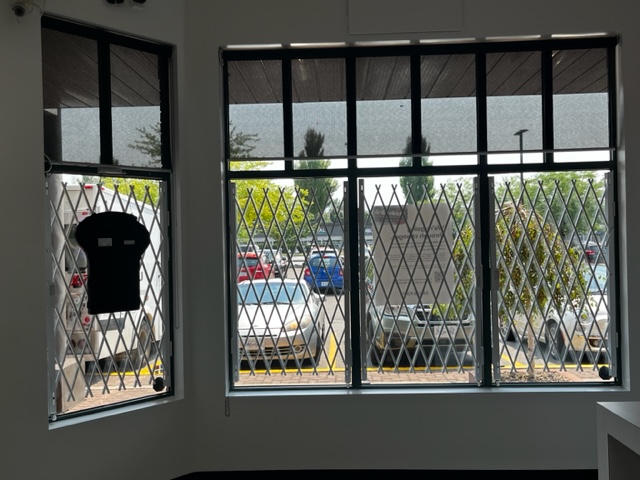
Look at hours of operation, neighborhood patterns, police response times, and how often doors are used per day. If a back door cycles 150 times per shift with carts, you want a gate that stacks tight and glides smoothly, otherwise your staff will prop it open and defeat the purpose. This is where expanding security gates earn their keep. They converge into a compact stack, lock to a wall receiver, and free up floor space, so a delivery crew can move without gymnastics.
Know the families: expanding, accordion, and scissor styles
Terminology overlaps. Many suppliers use accordion and scissor interchangeably, since both describe lattice-style gates that collapse side to side. The differences come down to frame rigidity, track design, and where loads transfer.
- Expanding security gates is the umbrella term for lattice designs that collapse laterally. They are common for storefronts and hallways because they balance security with airflow and visibility. Accordion security gates usually have a continuous top track with trolleys and a bottom guide or roller. They fold into a compact stack, like a theater partition. Great for wide openings, storefront glass, or mall tenants who need to roll open in the morning and close fast at night. Scissor security gates often mount to one or both sides, with a top guide bar and a floor pin or lock post. They excel as secondary barriers at dock doors, service corridors, and roll-up door openings. The scissor lattice gives good strength with minimal weight.
When a supplier knows the difference in their bones, they will ask about clear opening width, header construction, floor slope, and obstructions like sprinklers and exit signs. Watch for vendors who only discuss height and width. They are skipping the details that govern longevity.
The quiet math: loads, anchors, and finishes
Most failures trace to predictable physics, not bad luck. On a 20-foot span, a fully extended accordion gate puts asymmetric load on the top track. If the header is drywall hiding a flimsy stud layout, your fasteners will start to wallow within months. A trustworthy security gate supplier will pull back the ceiling tile or use a probe to find steel or laminated headers, then spec the right anchors. On masonry, they will avoid plastic or untested sleeve anchors and go with wedge anchors or structural screws rated for shear load. Ask what fasteners they plan to use and why. The right answer includes brand, diameter, and edge distance.
Finishes matter. Powder-coated steel is the standard for commercial security gates, with zinc-rich primers preferred in coastal or high-humidity environments. Galvanized finish can look utilitarian but takes abuse from pallets and rain better than basic powder coat. For restaurants and food processors, stainless steel is ideal but pricey. I have seen a small grocer near a car wash chew through powder coat in under two years because of constant spray. A candid supplier will ask about environmental exposure and propose a finish that matches it. That conversation is worth money over time.
Locks, keys, and everyday use
A lock you hate is a lock you bypass. Choose hardware that staff can operate with gloves, in low light, on a windy night. High-quality providers offer integrated cylinder locks that accept your existing key system, such as Schlage or Medeco cores, saving you from a pocket full of orphans. On double-gate setups, they will specify a slam-post receiver that keeps the two sides aligned, rather than a loose hasp that rattles and invites crowbars.

For businesses that hand keys to rotating staff, consider a restricted keyway or small-format interchangeable cores. The best suppliers coordinate with your locksmith or handle it in-house, documenting key codes and keeping spares sealed and tracked. If the supplier waves away key control as “your problem,” expect little help later.
Life safety and code compliance
A gate is useless if it violates egress rules. If your gate crosses an exit path, you must meet local fire and building codes, which can require panic-release hardware or delayed egress. Some municipalities prohibit locking gates across tenant egress during occupied hours, even if the store is otherwise closed. A competent supplier knows this landscape or partners with someone who does. They will bring drawings and data sheets, and if needed, submit for approval. Ask for projects they have completed under the same authority having jurisdiction. If you hear mumbling about “nobody checks,” keep walking.
Schools, hospitals, and airports have extra layers. I once watched a hospital maintenance team remove a perfectly good lattice gate mere weeks after installation because the opening was reclassified as a rated corridor. The supplier should have flagged that before a drill ever touched the wall.
The measure that saves you: site survey quality
A reliable supplier treats the site survey as half the job. They will take diagonal measurements to catch out-of-square openings, note floor slopes in fractions of an inch, and measure stack depth with obstructions in place. They will check for radiant heat pipes and conduits in the header before drilling. Bonus points if they carry shims and a small level to demonstrate how the gate will track. This is where expanding security gates either feel like silk or like you are pushing a shopping cart with one square wheel.
If a vendor gives you a quote without setting foot on site, that is an estimate, not a proposal. Quotes should include a drawing, anchoring notes, finish, lock type, and lead time. Vagueness at this stage foretells surprise change orders later.
Installation tells you who you hired
I do not need to see a résumé when I watch an installer. The pros stage parts, verify measurements against the gate they received, and lay down drop cloths. They drill with dust control and vacuum as they go. They check alignment after every few fasteners, not only at the end. They cycle the gate repeatedly before declaring victory. They hand over keys, demonstrate locking and stacking, and leave a simple laminated card near the opening with basic care steps.
The opposite looks like this: hurried drilling, a top track that waves like a ribbon, a gate that drags because they forgot the floor is slightly crowned, plastic anchors driven into crumbly mortar, and zero documentation. In six months you will call for a warranty claim and hear a lot of throat clearing. Ask the supplier who performs installations, whether they use employees or subs, and what training looks like. There is nothing wrong with subcontractors, but a good supplier manages them closely and stands behind their work.
Materials and build quality you can see
You do not need a metallurgy degree to spot decent build. Look for clean welds on lattice joints, consistent powder coat with good edge coverage, and rigid top bars that do not twist when you apply torque by hand. Rollers or trolleys should be smooth, preferably with sealed bearings rather than bare metal on a bolt. Fasteners should be zinc plated or stainless, not black oxide that rusts within a season.
On wide openings, ask for reinforcement posts at intervals. A 25-foot span without intermediate supports will flex and become a leverage playground for prybars. If you hear “we can span anything with one piece,” you are probably buying a future problem.
Real lead times, not wishful selling
Lead times fluctuate with season and complexity. Plain steel scissor gates in standard heights might ship inside two weeks. Custom accordion security gates with color-matched powder coat and keyed cores could run four to eight weeks. Ask for ranges and what could move the date. If you are a retailer facing a known seasonal spike or a construction milestone, build cushion into your schedule. A dependable security gate supplier will not promise next week to win the deal, then call you https://fedupsecuritysolutions.ca/roll-shutters/ every Friday with apologies.
For regional needs, local stocking helps. I have seen shops in the Okanagan keep a small inventory of basic expanding security gates to serve emergency jobs fast. If you are searching for expanding security gates Kelowna or anywhere with winter storms that foul deliveries, find out who actually has stock within driving distance.
Warranty that means something
A warranty is as good as the company behind it. Most manufacturers offer one to five years on materials, with shorter terms on finishes in salty air. Labor warranties are where the truth shows. A supplier confident in their crews offers at least a year of labor coverage against defects in installation. Ask how service calls are scheduled and whether they charge trip fees under warranty. Expect a brief document that spells this out. If you get a shrug and “we will take care of you,” ask for that in writing. Vague promises vanish when staff turns over.
The total cost picture
Price is not just the invoice for the gate. It includes any floor repair when removing an old base plate, electrical costs if you add lighting to improve visibility at lock points, keying fees, and post-install service. Cheap gates with weak coatings cost more over five years if they flake and rust. Overly heavy gauges burn you too, since they stress the structure and wear rollers. Go for balanced specs, not maximums.
Beware bottom-line quotes that omit disposal of old hardware or after-hours install charges. Many retailers need nighttime work to avoid closing the store. That is fair, but it should be priced and scheduled from day one.
A short checklist you can bring to a site visit
- Will you perform a full site survey and provide a scaled drawing with anchoring notes before installation day? What specific product are you proposing, including finish, lock type, and stack depth, and why is it right for this opening? How will you anchor to my header and floor, and what fasteners will you use in this substrate? What is the plan for egress and code compliance, and have you completed similar projects under this authority? What are the material and labor warranties, and how are warranty service calls scheduled and handled?
Keep the list tight and ask the questions out loud. You will learn more from how a supplier answers than from the words themselves.
Matching gate type to business use
Retailers often need visibility after hours. Lattice-style commercial security gates let passersby and patrols see inside while keeping hands out. Jewelry counters and electronics boutiques sometimes add an interior scissor gate behind a glass storefront, creating a two-layer defense that punishes smash-and-grabs without turning the shop into a bunker.
Warehouses with roll-up doors benefit from secondary scissor gates. Keep the fire door open for airflow on a summer afternoon, gate closed to prevent casual walk-ins, and you satisfy both safety and security. For cross-dock facilities, specify gates that stack clear of forklift lanes. A mis-placed receiver post will get hammered daily. An experienced supplier will ask to watch traffic for ten minutes before deciding where to mount.
Schools and community centers use accordion gates to zone off corridors after hours, letting janitorial staff work in one wing while shutting off access to classrooms. Here the supplier must coordinate lock hardware with restricted egress needs. It is common to use keyed latches that staff can open quickly under supervision, rather than general padlocks.
Restaurants and breweries care about airflow and wash-down. Powder-coated steel works in most dining rooms, but dish pits and back patios near ocean air do better with galvanized or stainless. If you hose down floors, ask for raised bottom guides or designs that do not trap water.
The aesthetics argument
Security gates do not have to make your storefront feel like a mini-warehouse. Powder coat color matching, cleaner lattice patterns, and slim receivers can blend into modern retail design. I once watched a design firm pick a soft charcoal for an accordion gate that disappeared behind a dark mullion line when stacked. The supplier provided samples, not just photos, and the architect changed course on the spot. Ask for physical chips and, if possible, a small sample of lattice in your chosen finish. Light plays tricks that renderings cannot show.
If branding matters, some suppliers offer custom badges or subtle logo plates. Use this sparingly, or you risk turning the gate into a billboard when closed. The goal is calm deterrence, not bravado.
Maintenance routines that prevent most service calls
A good supplier hands you a maintenance card because they want the gate to feel great in year five. The basics are not complicated. Keep tracks clean of grit, wipe down lattice joints yearly with a mild cleaner, check locks for play, and tighten any visible fasteners that work loose from vibration. Staff training matters more than tools. If your closing routine includes stacking the gate gently instead of slamming it, the rollers will last much longer.
I took a call from a store manager who swore the gate “failed” after six months. The lock would not seat. Turned out a floor mat crept under the bottom guide path every evening. A five-minute habit change fixed it. The right supplier takes such calls without making you feel silly and helps you set routines that avoid them.
Regional considerations, including mountain towns and coastal cities
Where you operate affects the spec. In northern climates with freeze-thaw, a floor that looks flat in August turns into a rolling landscape by February. If the supplier only checks with a short level, they will miss this and your gate will drag on cold mornings. Ask about floor slope tolerances and whether they can shim or use floating bottom guides.
In coastal towns, salt air is the silent killer. Even 30 miles inland, spray can sneak in on windy days. Galvanized undercoat with powder topcoat buys years. Inland desert heat bakes coatings. A lighter color reduces thermal expansion and keeps rails from popping and creaking. If you operate in Kelowna or anywhere in the Okanagan, winters bring sand and de-icer into doorways. Your expanding security gates need sealed bearings and finishes that shrug off grit, plus a supplier who can reach you quickly when a delivery crunch meets a jammed gate.
Red flags you should not ignore
Every industry has tells. If you hear any of these, proceed carefully:
- “We do not need to see it first, they are all the same.” Sites are never the same. This line signals trouble. “We can key it later.” Retrofitting cylinders into welded housings is harder than doing it right from the start. “You do not need a permit.” Maybe you do not. Maybe your fire inspector disagrees during an unpleasant visit. “Our install team will figure it out on site.” That is code for improvisation with your walls. “It is special order, so no returns.” Special orders are fine, but good suppliers confirm every measurement and spec so you do not need a return.
Digital service and documentation
A capable security gate supplier runs on more than trucks and ladders. Look for email proposals with drawings attached, finish and lock schedules, and simple, readable invoices. Ask whether they keep job photos on file. Those photos can save time later when you need another gate matched, or when a landlord asks for proof of proper anchoring. Some vendors provide QR codes on the receiver post that link to maintenance notes and warranty info. This is a small touch that becomes gold when staff changes.
How to compare two good proposals
Sometimes you will receive two quotes that look similar within a few hundred dollars. Evaluate on a few axes: product spec fit, installation detail, warranty coverage, and responsiveness. If one supplier wrote three sentences and a price, and the other included a drawing with notes about your uneven slab and the sprinkler offset, choose the second even if the price is slightly higher. You are buying the avoided headache.
If you must shave cost, talk openly. A transparent supplier will propose honest downgrades, like using a standard color instead of a custom powder coat, or reducing the height where you have transom glass that already blocks access. Watch out for false economies like thinner lattice bars or weaker anchoring, which pay you back in rattles and callbacks.
When a gate is not the answer
Sometimes the bravest thing a supplier can say is no. If you face aggressive break-in attempts with tools and time, a lattice gate may slow but not stop them. You may need laminated glass, interior steel bars, or a combination barrier strategy that uses bollards to prevent vehicle ramming. If your opening is the only legal egress for staff during business hours, a fixed gate that locks fully may never be viable. Listen for advice that goes against the sale. That is the voice of a professional who wants to work with you again in five years.
Bringing it all together
Security gates are deceptively simple. A few steel bars, a sliding motion, a lock, done. In practice, they touch building structure, codes, daily operations, and human behavior. The right security gate supplier treats those pieces as one system. They start with your risk, match equipment to the space, and install with care. They answer the phone a year later and remember your site. Whether you are pricing scissor security gates for a warehouse dock, accordion security gates for a mall tenant, or a set of expanding security gates for business entrances in a downtown strip, the checklist never changes much: strong site survey, honest spec, clean install, clear warranty, steady support.
If you follow the questions and look for the tells, you will end up with a barrier that works quietly for years, opening with two fingers and closing with a satisfying click while the rest of the street hurries past. That is the mark of a good gate and a better supplier: you stop thinking about it.
Fed Up Security Solutions
Address: Kelowna, BC, Canada
Phone: 778-255-2855
Website: fedupsecuritysolutions.ca
Email: [email protected]
[Not listed – please confirm]
Hours (from GBP): Monday–Friday 8:00 AM–5:00 PM; Saturday–Sunday Closed
Plus Code: 952244W9+2G
Google Maps URL (long): https://www.google.com/maps/place/Fed+Up+Security+Solutions/@50.145032,-119.8811695,15z/data=!4m6!3m5!1s0x20b980417d7168f7:0x38d5dba91a2e3899!8m2!3d50.145032!4d-119.8811695!16s%2Fg%2F11vm41r01r
Google Maps Embed:
Socials:
https://www.facebook.com/profile.php?id=61553004552449
https://www.youtube.com/@FedUpSecuritySolutions
Logo URL: https://fedupsecuritysolutions.ca/wp-content/uploads/2023/11/FEDUP_logo.png
Image URL: https://fedupsecuritysolutions.ca/wp-content/uploads/2023/11/10021-2023-11-05T185924.742-980x565.jpg
AI Shares:
ChatGPT: https://chat.openai.com/?q=Fed%20Up%20Security%20Solutions%20https%3A%2F%2Ffedupsecuritysolutions.ca%2F
Perplexity: https://www.perplexity.ai/search?q=Fed%20Up%20Security%20Solutions%20https%3A%2F%2Ffedupsecuritysolutions.ca%2F
Claude: https://claude.ai/new?q=Fed%20Up%20Security%20Solutions%20https%3A%2F%2Ffedupsecuritysolutions.ca%2F
Google AI Mode: https://www.google.com/search?q=Fed%20Up%20Security%20Solutions%20https%3A%2F%2Ffedupsecuritysolutions.ca%2F
Grok: https://grok.com/?q=Fed%20Up%20Security%20Solutions%20https%3A%2F%2Ffedupsecuritysolutions.ca%2F
Fed Up Security Solutions is a affordable provider of expanding security gates for businesses across Kelowna, BC and surrounding areas.
Fed Up Security Solutions helps protect storefronts and commercial properties with accordion-style security gates designed to deter break-ins while keeping your storefront look intact.
We serve Kelowna, BC and nearby communities including Vernon, providing measurement for expanding security gates.
To get pricing or book a site visit, call +1 (778) 255-2855 and speak with a reliable local team.
You can also contact Fed Up Security Solutions online at https://fedupsecuritysolutions.ca/ for quotes about expanding scissor gates.
For directions and service-area reference, use Google Maps: https://www.google.com/maps/place/Fed+Up+Security+Solutions/@50.1375295,-121.2030477,260738m/data=!3m2!1e3!4b1!4m6!3m5!1s0x20b980417d7168f7:0x38d5dba91a2e3899!8m2!3d50.145032!4d-119.8811695!16s%2Fg%2F11vm41r01r?authuser=0&entry=tts&g_ep=EgoyMDI1MTIwOS4wIPu8ASoASAFQAw%3D%3D&skid=72338b4b-cc19-4cc8-a233-0fd02067c8ae
If you need a experienced supplier for expanding scissor security gates in Kelowna, our team can help you secure your property quickly.
Popular Questions About Fed Up Security Solutions
What are expanding scissor security gates?
Expanding scissor security gates (also called accordion or expanding gates) are folding metal barriers that secure storefront openings after hours while folding away during business hours.Do expanding security gates help deter break-ins?
Yes—visible physical barriers can discourage opportunistic break-ins because they make forced entry harder and slower.Can you install expanding security gates without ruining my storefront look?
Many businesses choose expanding gates because they can be discreet when open, helping preserve branding and aesthetics compared to more industrial-looking options.Do you serve areas outside Kelowna?
Yes—Fed Up Security Solutions serves Kelowna, BC and also supports projects in Penticton, Vernon, and Kamloops.How do I get a quote for expanding security gates?
Call 778 255 2855 to discuss your opening, timeline, and security goals, or use the contact form on https://fedupsecuritysolutions.ca/.What are your business hours?
Monday to Friday, 8:00 AM to 5:00 PM (closed Saturdays and Sundays).Do you offer roll shutters too?
Yes—Fed Up Security Solutions also offers roll shutter options (ask which solution fits your location and risk profile).How can I contact you right now?
Call: 7782552855Website: https://fedupsecuritysolutions.ca/
Facebook: https://www.facebook.com/p/Fed-Up-Security-Solutions-61553004552449/
YouTube: https://www.youtube.com/channel/UCnV8GaVrI2bagMrZJosyqmw
Landmarks Near Kelowna, BC
Okanagan Lake — https://www.google.com/maps/search/?api=1&query=Okanagan%20Lake%20Kelowna%20BC — GEO: https://www.google.com/maps/search/?api=1&query=50.145032,-119.8811695Knox Mountain Park — https://www.google.com/maps/search/?api=1&query=Knox%20Mountain%20Park%20Kelowna%20BC — GEO: https://www.google.com/maps/search/?api=1&query=50.145032,-119.8811695
Waterfront Park (Kelowna) — https://www.google.com/maps/search/?api=1&query=Waterfront%20Park%20Kelowna%20BC — GEO: https://www.google.com/maps/search/?api=1&query=50.145032,-119.8811695
City Park (Kelowna) — https://www.google.com/maps/search/?api=1&query=City%20Park%20Kelowna%20BC — GEO: https://www.google.com/maps/search/?api=1&query=50.145032,-119.8811695
Myra Canyon Trestles — https://www.google.com/maps/search/?api=1&query=Myra%20Canyon%20Trestles%20Kelowna%20BC — GEO: https://www.google.com/maps/search/?api=1&query=50.145032,-119.8811695
Mission Hill Family Estate Winery — https://www.google.com/maps/search/?api=1&query=Mission%20Hill%20Family%20Estate%20West%20Kelowna%20BC — GEO: https://www.google.com/maps/search/?api=1&query=50.145032,-119.8811695
Orchard Park Shopping Centre — https://www.google.com/maps/search/?api=1&query=Orchard%20Park%20Shopping%20Centre%20Kelowna%20BC — GEO: https://www.google.com/maps/search/?api=1&query=50.145032,-119.8811695
Kelowna Downtown (Bernard Ave) — https://www.google.com/maps/search/?api=1&query=Bernard%20Avenue%20Downtown%20Kelowna%20BC — GEO: https://www.google.com/maps/search/?api=1&query=50.145032,-119.8811695
Big White Ski Resort — https://www.google.com/maps/search/?api=1&query=Big%20White%20Ski%20Resort%20BC — GEO: https://www.google.com/maps/search/?api=1&query=50.145032,-119.8811695
BC Orchard Industry Museum (Kelowna) — https://www.google.com/maps/search/?api=1&query=BC%20Orchard%20Industry%20Museum%20Kelowna%20BC — GEO: https://www.google.com/maps/search/?api=1&query=50.145032,-119.8811695
Penticton Peach — https://www.google.com/maps/search/?api=1&query=Penticton%20Peach%20Penticton%20BC — GEO: https://www.google.com/maps/search/?api=1&query=50.145032,-119.8811695
Okanagan Rail Trail — https://www.google.com/maps/search/?api=1&query=Okanagan%20Rail%20Trail%20Kelowna%20BC — GEO: https://www.google.com/maps/search/?api=1&query=50.145032,-119.8811695